
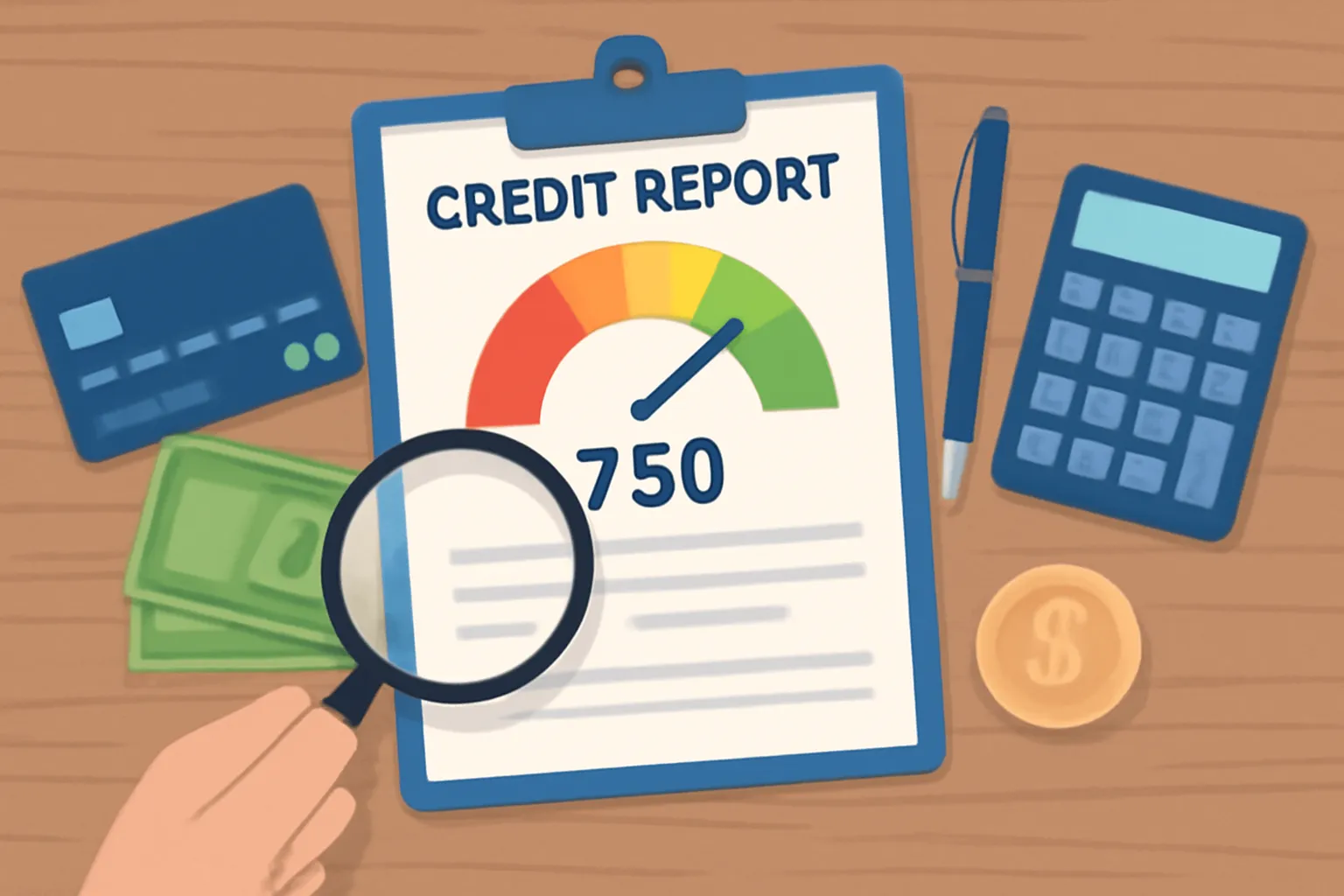
Why Your Credit Report Matters More Than You Think
For many people, the phrase understanding your credit report sounds technical and intimidating. Yet your credit report is one of the most powerful records about you—used to decide whether you can rent an apartment, finance a car, qualify for a mortgage, get a cell phone plan, or even land a job in some industries. At its core, your credit report is a detailed history of how you’ve handled debt. It is not your score, but it powers your score. When you master the art of reading, disputing, and improving your credit report, you take control of a key part of your financial life.
This long-form guide is a step-by-step roadmap to decoding your credit report: what’s in it, how to interpret each line, how to challenge inaccuracies effectively, and how to build long-term excellence in your credit profile. Think of it as a practical toolkit—rich in plain language, examples, timelines, and best practices—to help you become confident in every aspect of your credit file.
What Is a Credit Report, Exactly?
A credit report is a compiled record of your credit-related accounts and activity. It’s maintained by private companies known as credit reporting agencies (CRAs) or credit bureaus. In the U.S., the big three are Equifax, Experian, and TransUnion. Lenders and other businesses furnish data to these bureaus, which then organize it into your personal credit file.
Key Sections You’ll See
- Personal information: Names (including variations), Social Security number (masked), date of birth, current and past addresses, phone numbers, and employer data. This section is not scored but affects matching accuracy and identity verification.
- Credit accounts (tradelines): Details about credit cards, mortgages, auto loans, student loans, and other accounts. You’ll see open and closed accounts, credit limits, balances, payment history, and current status.
- Inquiries: A list of who has accessed your report. Hard inquiries can affect your score; soft inquiries do not.
- Collections: Debts that were sent to a collection agency. This area requires careful review for accuracy and timing.
- Public records: In modern U.S. reports, this typically only includes bankruptcies. Civil judgments and tax liens generally no longer appear in mainstream consumer credit reports.
- Consumer statements: Your own written explanations (optional) of disputed or special circumstances.
While many people equate credit health with a single number, your credit report is richer and more nuanced. Understanding your credit file gives you context that no three-digit score can fully capture.
Where Your Credit Data Comes From
Banks, credit card issuers, auto lenders, mortgage servicers, student loan servicers, utilities, and collection agencies are considered data furnishers. They report your account details to one or more bureaus—often monthly. There is no requirement that every lender report to all three bureaus, which explains why your reports can differ across Equifax, Experian, and TransUnion.
Reporting follows industry standards, but errors happen: mismatched identities due to similar names, timing discrepancies, data-entry mistakes, and outdated information. That’s why reviewing and comprehending your credit report is vital to catching inaccuracies quickly.
How to Get and Read Your Credit Reports
Getting Your Reports (U.S.)
- Use AnnualCreditReport.com, the official portal. The three major bureaus provide free weekly online reports through this site.
- You can also request reports by mail or phone; the site provides forms and instructions.
- Consider security freezes and identity verification if you’re blocked or asked to provide documentation.
Getting Your Reports (Outside the U.S.)
- United Kingdom: Check Experian, Equifax, and TransUnion. You can access a free statutory credit report and view score/report via third-party apps.
- Canada: Equifax and TransUnion provide free online reports and scores, with additional paid features.
- European Union: Under the GDPR, you have the right to access your personal data and request corrections; national credit bureaus vary by country.
Decoding the Sections: What to Look For
Personal Information
- Confirm your legal name and note variations. Misspellings and old names are common; inaccuracies can trigger mixed files with someone else’s accounts.
- Check addresses and employers. Remove those you don’t recognize to reduce risk of misfiled data.
- Ensure phone numbers are yours.
Accounts (Tradelines)
- Account type: Revolving (credit cards) or installment (loans).
- Status: Open, closed, current, late, charged off, in collections, or transferred.
- Payment history: Month-by-month marks. Late payments are often categorized as 30/60/90/120+ days late.
- Credit limit and balance: Key for utilization ratios; errors here can impact scores.
- Dates: Opened date, last payment date, last update/reported date, and Date of First Delinquency (DOFD)—critical for how long negatives remain.
Collections
- Verify the original creditor, balance, and DOFD. Make sure you recognize the account.
- Note that paid medical collections should no longer appear with the three major U.S. bureaus. Many medical collections under $500 are removed as well.
Inquiries
- Hard inquiries: Triggered by applications you initiate; can affect your score for up to 12 months and remain visible for about 24