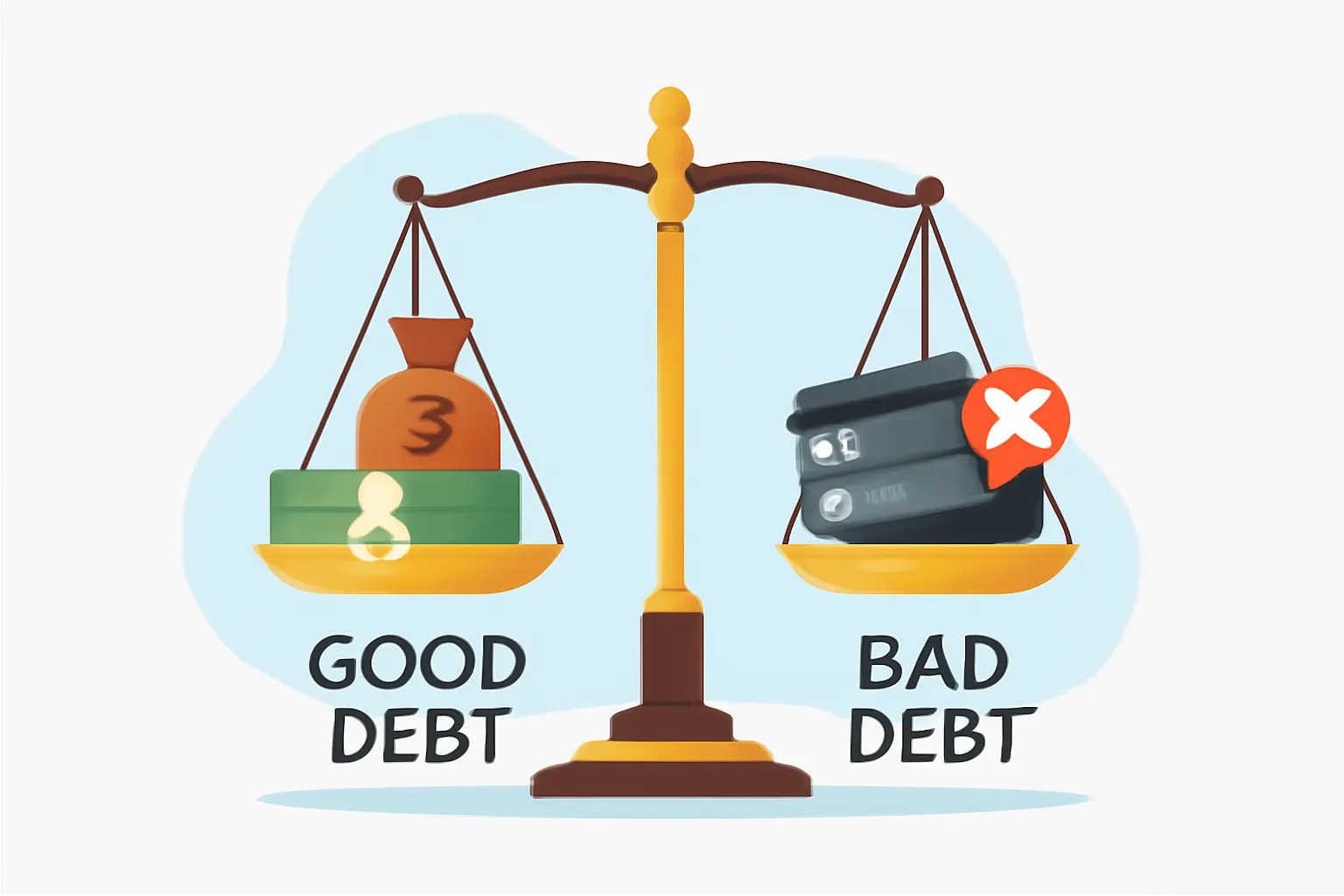
Debt can be a powerful tool or a heavy shackle. The difference often lies not in the existence of debt itself, but in how and why you use it. This long-form guide dives deep into the nuances of good debt vs. bad debt, explains how to evaluate any borrowing decision, and offers practical strategies to manage debt intelligently. While general rules of thumb help, the best decisions come from understanding the purpose, cost, risk, and payoff of every obligation you take on.
What Do We Mean by Good Debt and Bad Debt?
At its core, debt is simply an agreement to receive money now and pay it back later, usually with interest. Yet the way we talk about debt often carries judgment. Calling something “good debt” or “bad debt” can oversimplify decisions that depend on your goals, income, risk tolerance, and circumstances. Still, the distinction is useful when used thoughtfully.
Defining “Good” vs. “Bad” in Practical Terms
Good debt—sometimes called constructive, productive, or smart debt—is borrowing that is likely to increase your net worth or improve your long-term earning power. It often supports assets or activities that can appreciate or generate cash flow. Examples include a well-priced mortgage, education that meaningfully lifts income, or a business loan that reliably expands profits.
Bad debt—also referred to as toxic, destructive, or consumptive debt—typically finances depreciating assets or ongoing consumption without lasting value, and often comes with high interest rates. Common examples include revolving credit card balances for lifestyle spending, payday loans, rent-to-own contracts, and high-interest auto loans for cars beyond your means.
Debt as a Tool: Leverage and Risk
Debt is a form of leverage. It magnifies outcomes, good or bad. If you borrow at 6% to invest in a skill set that boosts your income by 20%, you win. If you borrow at 24% APR to buy fast fashion, you pay more and have nothing to show for it later. The real question isn’t “Is debt good or bad?” but rather: “Does this borrowing increase my expected long-term net worth or wellbeing with reasonable risk?”
How to Tell Whether a Debt Is “Good” or “Bad”
Use the following tests to separate beneficial debt from harmful debt. Think of this as a decision framework rather than a rigid rulebook.
The ROI vs. APR Test
- Expected return exceeds interest cost: If the reasonably likely after-tax return (financial or career-based) from the thing you’re financing exceeds the interest rate, that’s a point in favor of “good debt.”
- Confidence in the payoff: The more predictable the payoff (e.g., a skill certification in a high-demand field), the stronger the case for borrowing.
- Be conservative: Overestimate costs, underestimate benefits. If it still looks good, it’s probably a sound decision.
The Cash-Flow Test
- Positive or manageable cash flow: A “good” borrowing decision doesn’t sabotage your month-to-month life. Can you comfortably make payments after savings and essential expenses?
- Stress test: Would a temporary income dip break your budget? If a small emergency could cause missed payments, the risk rises.
The Asset Quality and Depreciation Test
- Appreciating vs. depreciating: Financing assets that appreciate (homes in healthy markets, useful credentials, stable businesses) is generally better than financing items that rapidly depreciate (cars, gadgets).
- Durable value: Will this purchase still matter and deliver value five or ten years from now?
The Risk, Flexibility, and Terms Test
- Interest rate and fees: Lower fixed rates and minimal fees are preferable. Watch for variable rates that can jump, prepayment penalties, and hidden charges.
- Security and collateral: Secured loans (e.g., mortgages) may have lower rates but put your asset at risk. Unsecured loans are often pricier.
- Rescheduling flexibility: Are deferment, forbearance, or income-driven options available? Student loans may offer more flexibility than personal loans.
The Timeline and Match Test
- Match the loan term to the asset’s life: Don’t take a 7-year loan for a phone you’ll replace in 2 years. Longer terms for shorter-lived assets create overlap and risk.
- Payoff horizon: The sooner you can fully pay off the debt without straining your finances, the better.
Debt-to-Income and Utilization Metrics
- Debt-to-income ratio (DTI): Many lenders prefer total monthly debt payments to be under 36% of gross income, with housing-related costs under 28%. Lower is safer.
- Credit utilization: Keep credit card balances below 30% of limits, and ideally under 10% for credit score health.
Examples of “Good Debt” (and When It Can Turn Bad)
Even the classic examples of “good debt” have caveats. Consider these as often, not always, constructive forms of borrowing.
Mortgages
Mortgage debt is commonly seen as wise leverage, because it finances housing—an essential need—and can be attached to an appreciating asset. If you buy within your means in a solid market, you convert rent into equity over time. At fixed rates, you also lock in housing costs, which can be powerful during inflation.
- Why it can be “good”: Potential appreciation, tax advantages in some jurisdictions, forced saving via principal payments, and payment stability with fixed-rate loans.
- Watch outs:
- Buying more house than you need, leading to high carrying costs (maintenance, taxes, insurance).
- Adjustable-rate mortgages (ARMs) without a margin of safety if rates climb.
- Overly long terms or interest-only structures that delay principal reduction without clear strategy.
Bottom line: A mortgage can be a model of good debt vs bad debt dynamics: it’s “good” when aligned with budget, market, and long-term plans; “bad” when it creates financial strain or relies on speculative appreciation.
Education and Student Loans
Borrowing for education can be highly productive, especially when it leads to reliably higher earnings or opens doors to in-demand careers. But the value is program-specific, not generic.
- Signals of constructive borrowing:
- Degrees or certifications with strong job placement and clear salary uplift.
- Public service loan forgiveness (PSLF) or employer tuition assistance opportunities.
- Total debt under a year’s expected starting salary in the field (a common guideline).
- Red flags:
- High-cost programs with weak completion or job placement rates.
- Borrowing for living expenses without budgeting, leading to more debt than necessary.
- Variable-rate private loans without safeguards or co-signer risks.
Takeaway: Education debt can be great leverage, but it’s not inherently “good.” Tie borrowing to realistic career outcomes, and avoid overborrowing relative to expected pay.
Business Loans and Professional Equipment
Debt that funds revenue-generating projects or capacity expansion can be profoundly productive. A restaurant adding a profitable delivery operation, a contractor upgrading to more efficient tools, or a dentist financing a new chair each represent targeted, cash-flow-positive borrowing.
- Best practices:
- Link the loan term to the equipment’s useful life.
- Model conservative revenue assumptions and stress test for slower sales.
- Beware personal guarantees; they bridge business risk into personal finances.
- When it slips into “bad debt”:
- Borrowing for vanity projects or unproven ideas without a plan or market fit.
- Relying on high-cost merchant cash advances that erode margins.
0% Promotional Financing Used Strategically
Short-term 0% APR offers (on appliances, medical procedures, or credit cards) can be a smart tool if:
- You have a clear payoff plan before the promotional window ends.
- You avoid “deferred interest” traps where missing the deadline retroactively adds interest.
- You don’t treat it as a license to overspend.
Executed well, this can be a form of good vs bad debts finesse—free financing for needed purchases. But if mismanaged, it becomes costly quickly.
Examples of “Bad Debt” (and How to Escape It)
Some borrowing structures are inherently risky due to their high cost, complexity, or the fact that they typically fund consumption rather than investment.
Revolving Credit Card Debt for Lifestyle Spending
Credit cards are useful tools for convenience, protections, and rewards—only when paid in full monthly. Carrying balances at high APRs (often 18–29%+) can crush budgets.
- Why it’s “bad”: Compounding interest adds up fast, and the purchase rarely appreciates or adds lasting income.
- How to fix it:
- Stop new charges on that card; switch to a debit card or a low-limit card paid in full.
- Use the avalanche method (highest APR first) to minimize interest, or snowball (smallest balance first) for motivation.
- Consider a 0% balance transfer with a clear payoff plan; watch fees and deadlines.
Payday Loans and Auto Title Loans
These