
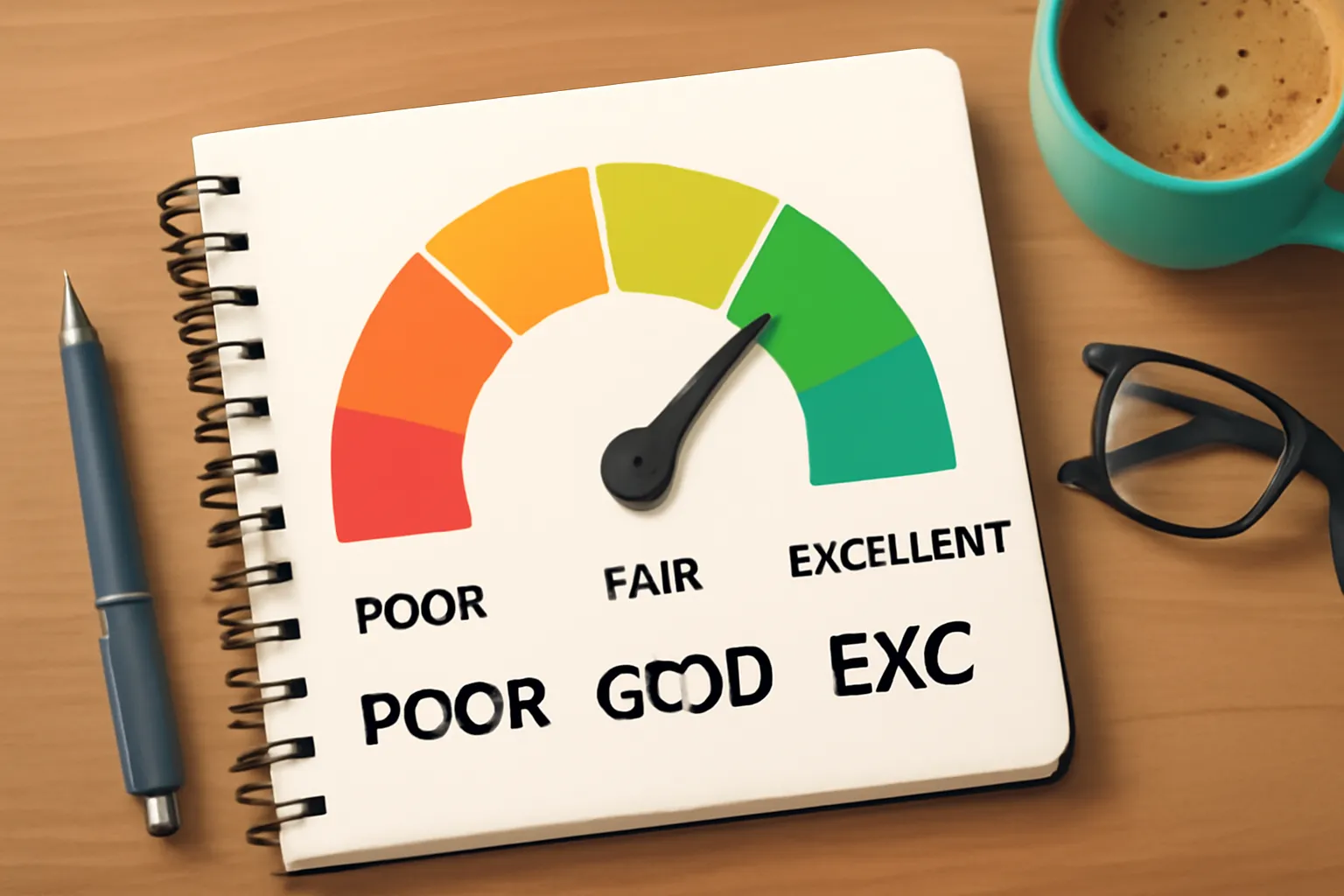
Defining a “Good” Credit Score
Credit scores are three-digit numbers designed to predict your likelihood of paying bills on time. In the United States, the two most common scoring systems are FICO and VantageScore, both generally ranging from 300 to 850. The question “What is a good credit score rating?” is best answered by looking at where your number falls on those scales.
FICO Score Ranges (Most Commonly Used by Lenders)
- 300–579: Poor
- 580–669: Fair
- 670–739: Good
- 740–799: Very Good
- 800–850: Exceptional
In the FICO world, the typical answer to “What is considered a good credit score?” is 670–739. Above that, 740+ can unlock the best rates and terms, and 800+ often gets you lenders’ top-tier pricing (subject to your full application).
VantageScore Ranges (Increasingly Used by Fintechs and Some Lenders)
- 300–499: Very Poor
- 500–600: Poor
- 601–660: Fair
- 661–780: Good
- 781–850: Excellent
Under VantageScore, the answer to “What number is a good credit score?” is typically 661–780. Despite these labels, keep in mind that lenders set their own cutoffs based on their risk appetite and the specific product you’re applying for.
Why a Good Credit Score Matters
A stronger score doesn’t just mean bragging rights. It affects your financial life in tangible ways. If you’re asking “How high is a good credit score?” consider the benefits:
- Lower interest rates on mortgages, auto loans, and personal loans, potentially saving you thousands over time.
- Higher approval odds for credit cards and loans, with more favorable terms.
- Lower security deposits for utilities, cell phone plans, and sometimes rentals.
- Better rewards credit cards with higher limits, better perks, and promotional APRs.
- Potentially lower insurance premiums in states where insurers use credit-based insurance scores.
The bottom line: Improving your score is one of the highest-ROI financial moves you can make.
How Credit Scores Are Calculated
While exact formulas are proprietary, the factors that affect FICO are well known, and VantageScore uses a similar set. Think of your score as a summary of how you manage credit. Asking “What counts as good credit?” really means “How well do I manage these key factors?”
Core Factors and Their Typical Importance
- Payment history (largest factor): Do you pay on time? Late payments, charge-offs, and collections hurt the most.
- Amounts owed/credit utilization: The percentage of your available credit you’re using. High utilization can drag down an otherwise good score.
- Length of credit history: Age of your accounts and average age. Older, well-managed accounts help.
- New credit/inquiries: Too many hard inquiries or lots of new accounts can signal higher risk.
- Credit mix: A blend of revolving credit (cards) and installment loans (auto, mortgage, student loans) can help, but it’s a minor factor compared to payment history and utilization.
In simple terms, the fastest path to a “good” or “very good” score is on-time payments and low utilization sustained over time.
How to Check Your Score Without Hurting It
Checking your own score is a soft inquiry and won’t affect your credit. You can monitor via:
- Credit card/financial apps: Many provide free FICO or VantageScore updates.
- Credit bureaus: Experian, Equifax, and TransUnion offer direct access to your reports and often your scores.
- AnnualCreditReport.com: Free reports from all three bureaus, weekly access currently available. You may need to pay for scores, but the reports themselves are crucial.
Also note: You can place free fraud alerts or credit freezes with the bureaus if you suspect identity theft—these don’t damage your score and can protect it.
Score Ranges by Product: What Lenders Often Consider “Good”
The answer to “What is a good credit score to buy a house?” or “What is a decent score for an auto loan?” varies.
- Mortgages: Many lenders still use older FICO versions. Generally, 680–700+ can be competitive; 740+ is often considered top-tier. Government-backed loans (FHA/VA/USDA) can be more flexible, but your score still affects rates and costs.
- Auto loans: Approvals happen across a wide range, but better rates usually start appearing around 660–700+.
- Credit cards: For premium rewards cards, 700–740+ is common; entry-level cards can approve lower.
- Personal loans: Many lenders prefer 660–700+ for favorable rates, though specialized lenders may approve lower with higher APRs.
- Insurance: In states where permitted, better credit can reduce premiums. Scores used for insurance are related but not always the same as FICO 8/VantageScore 3.0/4.0.
Lenders also assess your income, debt-to-income ratio, employment stability, and any derogatory marks—score isn’t the only factor.
How to Raise Your Credit Score Fast (30–90 Days)
If you’re asking, “How can I get to a good credit score quickly?” focus on strategies that can move the needle soon:
- Lower your utilization:
- Pay revolving balances down—aim for under 30% utilization, ideally under 10%.
- Make an extra payment before the statement closes so a lower balance is reported.
- Ask for a credit limit increase (without a hard inquiry if possible). A higher limit reduces your utilization.
- Fix errors on your credit reports:
- Dispute incorrect late payments, balances, or accounts directly with the bureaus.
- Provide documentation; errors, once removed, can produce a quick lift.
- Resolve small collections:
- For certain debts (especially medical), paid collections may be removed or updated to paid. The major bureaus already remove many paid medical collections and medical debts under certain thresholds after waiting periods.
- Ask for a pay-for-delete in writing with third-party collectors where feasible and lawful.
- Use autopay for at least minimums:
- Prevent any late payments, which cause the biggest drops in score.
- Become an authorized user (AU):
- If a family member has a well-aged, low-utilization card with a spotless history, being added can help.
- Ensure the issuer reports AUs to all three bureaus; not all do.
- Time your applications:
- Avoid new hard inquiries before major applications; inquiries can slightly dip your score.
Build and Maintain Excellent Credit (6–24 Months)
The answer to “What is a great credit score and how do I get there?” is steady, disciplined habits:
- Never miss a payment. Set up autopay for minimums and schedule a second payment for the statement balance.
- Keep utilization low on each card and overall. High balances—even if paid in full later—can hurt the score that lenders see.
- Avoid excessive new accounts. Age matters; let your accounts mature.
- Maintain a healthy mix if it fits your life (e.g., a credit card and an installment loan). Don’t open accounts just for mix.
- Monitor your reports periodically; catch errors early.
Over time, these habits compound. People often move from “good” to “very good” to “excellent” with consistent on-time payments and low utilization.